
What do farms need for restrooms under OSHA?
OSHA 1928.110 covers field sanitation for hand-labor operations: potable water, toilets and handwashing facilities, figured at one facility per 20 employees, and it has to sit within a quarter mile walk of wherever people are working the field. That is different from a construction site rule. If your operation mixes field labor with building work, like a barn renovation or a new equipment shed, the construction standard in OSHA portable toilet requirements applies to that crew instead, at one unit per 20 workers under OSHA 1926.51(c). Framingham farms running both kinds of labor at once sometimes need two different counts on the same property. A standard porta potty rental with a 60 to 70 gallon holding tank covers most seasonal crews. Larger operations, or ones running through harvest with fluctuating crew size, often do better with monthly porta potty rental pricing instead of booking week to week. Water access matters too: OSHA 1926.51(a)(1) calls for an adequate supply of potable water at any place of employment, and a lot of field sites do not have a tap nearby, so we pair units with a jug fill or a handwashing station rental that carries its own reservoir.
How many units does a farm actually need?
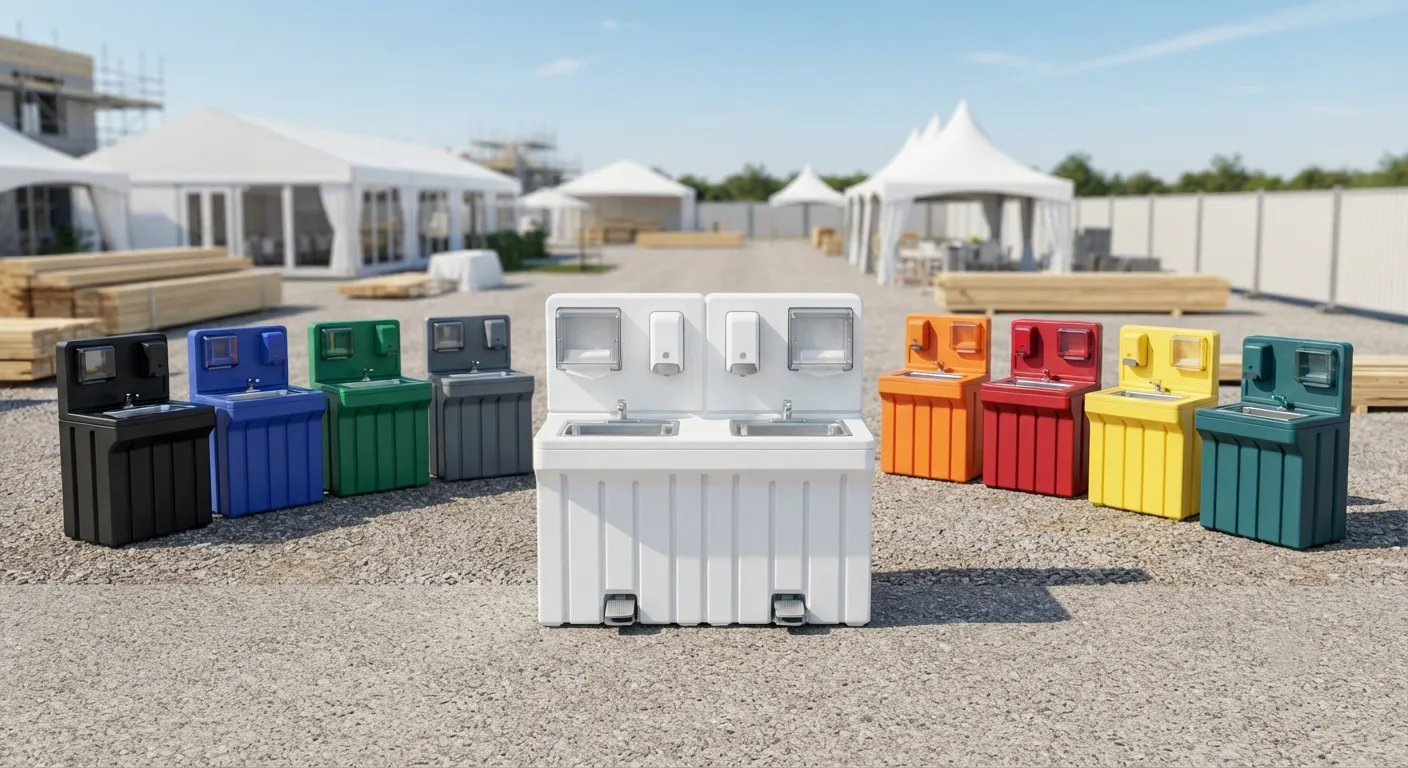
Crew size and field spread drive the count more than acreage does. A 15-person picking crew working one field can run on a single unit if it sits centrally, but split that same crew across two fields a half mile apart and you need one per field to keep everyone inside that quarter-mile walk. Framingham operations near Ashland, about 4.9 miles southwest, or Sudbury, 6.5 miles north, sometimes share labor crews across properties during peak season, and each property needs its own count under 1928.110, since the standard is tied to where people work, not to the farm as a legal unit. Use how many porta potties do i need to run the math for your specific crew and layout. For crews working herbicide or pesticide application, OSHA 1926.51(f)(1) requires washing facilities beyond a basic sanitizer stand, since hand sanitizer does not satisfy a real handwashing requirement under 29 CFR 1910.141(d)(2), soap and a towel or dryer are the standard. A portable sink rental or hand sanitizer station rental covers different tiers of that need depending on what your crew is spraying.
Why do farm sites need different placement than construction sites?
Fields do not have curbs or driveways, so placement is about ground stability and access for the service truck, not permit lines. ADA Standards 302.1 calls for stable, firm, slip-resistant surfaces, which matters on a farm where ground turns soft after irrigation or rain, and a unit set on loose dirt can tip or sink over a season. We look at truck access first: a delivery to a back field needs a route the pump truck can actually drive without getting stuck, and that changes with the season more than a construction lot ever does. Farms running row crops or livestock also deal with dust, chemical drift and animal traffic that a job site downtown never sees, so we place units upwind and away from runoff paths where we can. If your property also runs public-facing activity, like a farm stand, pick-your-own weekends or a fall festival, that is a different animal entirely: check festival restroom rental or county fair restrooms for guest-facing counts, which run higher than a labor crew count because visitors do not know to plan around one unit. A deluxe flushable porta potty or an ADA accessible porta potty fits public events better than the labor-crew standard unit, since ADA Standards 213.2 requires at least one accessible unit in any cluster, five percent minimum. Framingham's agricultural parcels near Marlborough, 8.3 miles northwest, run this kind of mixed use often enough that we ask about public access before quoting.
| service | daily | weekly | monthly |
|---|---|---|---|
| standard unit | 100 to 350 | 130 to 500 | 125 to 325 |
| handwashing station | see quote | see quote | see quote |
| delivery fee | 100 to 500 | 50 to 150 | 120 to 420 |
For septic needs on the property itself, from a farmhouse tank to a milking parlor, see septic pumping service or how often to pump a septic tank, since a residential septic tank typically needs pumping every 3 to 5 years depending on tank size and household load. Start a quote through request a quote or browse construction site services if your farm project overlaps with new building work.
How often does OSHA require servicing on field units?
OSHA does not set a hard service interval, but ANSI/PSAI Z4.3 uses one visit per week for up to 10 users over a 40-hour week as its baseline. Bigger crews or hot weather push that higher. We service on a schedule matched to your crew size.
Can I rent just one unit for a small farm crew?
Yes, if your crew stays under 20 workers and works one contiguous area. OSHA 1928.110 sets one facility per 20 hand-labor employees, so a single standard porta potty rental covers a small crew as long as it is within a quarter mile walk.
Do I need an accessible unit for farm workers?
Only if your setup involves clustered units, seasonal help open to the public, or a specific accommodation need. ADA Standards 213.2 applies where units are clustered. A labor crew with one unit does not trigger that rule the same way a public event does.
What is the difference between agricultural and construction toilet rules?
Agricultural field labor falls under OSHA 1928.110, based on a quarter-mile walk and one facility per 20 workers. Construction crews fall under OSHA 1926.51(c), based on headcount tiers. Farms doing both types of work may need to count separately for each crew.
Does a handwashing station meet OSHA's chemical handling requirement?
Only if it has soap and a towel or dryer, not just sanitizer. OSHA 1926.51(f)(1) applies specifically to paints, coatings, herbicides or insecticides. 29 CFR 1910.141(d)(2) sets the standard: soap plus a drying method, sanitizer alone does not count.
Next step
Get a delivery date
Tell us the address, the dates and the headcount. We size the order and confirm the route.