
How Do Porta Potties Work?
There is no flush. A construction worker running to a porta-potty on a job site opens the door, does their business, and the waste drops straight into the holding tank underneath. That tank holds a chemical mix, usually a blue dye plus deodorizer, that starts breaking down solids right away and keeps the smell down between visits. Ventilation comes from a roof vent stack, not a fan, which is why placement matters. A portable toilet rental in direct sun all day in Framingham will smell stronger than one set in shade. Most standard units run about 92 inches tall and 44 by 48 inches on the ground, small enough to tuck against a fence line but tall enough that headroom is never the issue. For anyone comparing this to a porta john rental or wondering how the numbers work for a whole crew, the ratio comes from OSHA 1926.51(c): one toilet for every 20 workers on a crew of 20 or fewer, scaling up from there. If you are planning for a build, the how many porta potties do I need guide walks through the math.
How Do Flushable Porta Potties Work?
A deluxe or flushable unit uses a small onboard freshwater tank and a hand pump or foot pump to push a rinse of water into the bowl after use, instead of relying only on the chemical soup below. The waste still drops into the same kind of holding tank, but the flush cuts down what sticks to the bowl, which is the main odor source in a standard unit. A deluxe flushable porta potty works well for a wedding or backyard event in Framingham where guests expect something closer to a real bathroom. An ADA accessible porta potty often comes in this flushable style too, built with a 60 inch turning circle per ADA Standards 304.3.1 and a wider door opening, since ADA Standards 404.2.3 sets minimum clear door width at 32 inches. Where units are clustered on a site, ADA Standards 213.2 requires at least 5 percent to be accessible, never fewer than one. Camping porta potties work on the same basic principle as flushable units but scaled down, which is why they show up so often for camping porta potty setups near Sudbury, about 6.5 miles north of Framingham.
How Does a Portable Sink Work?
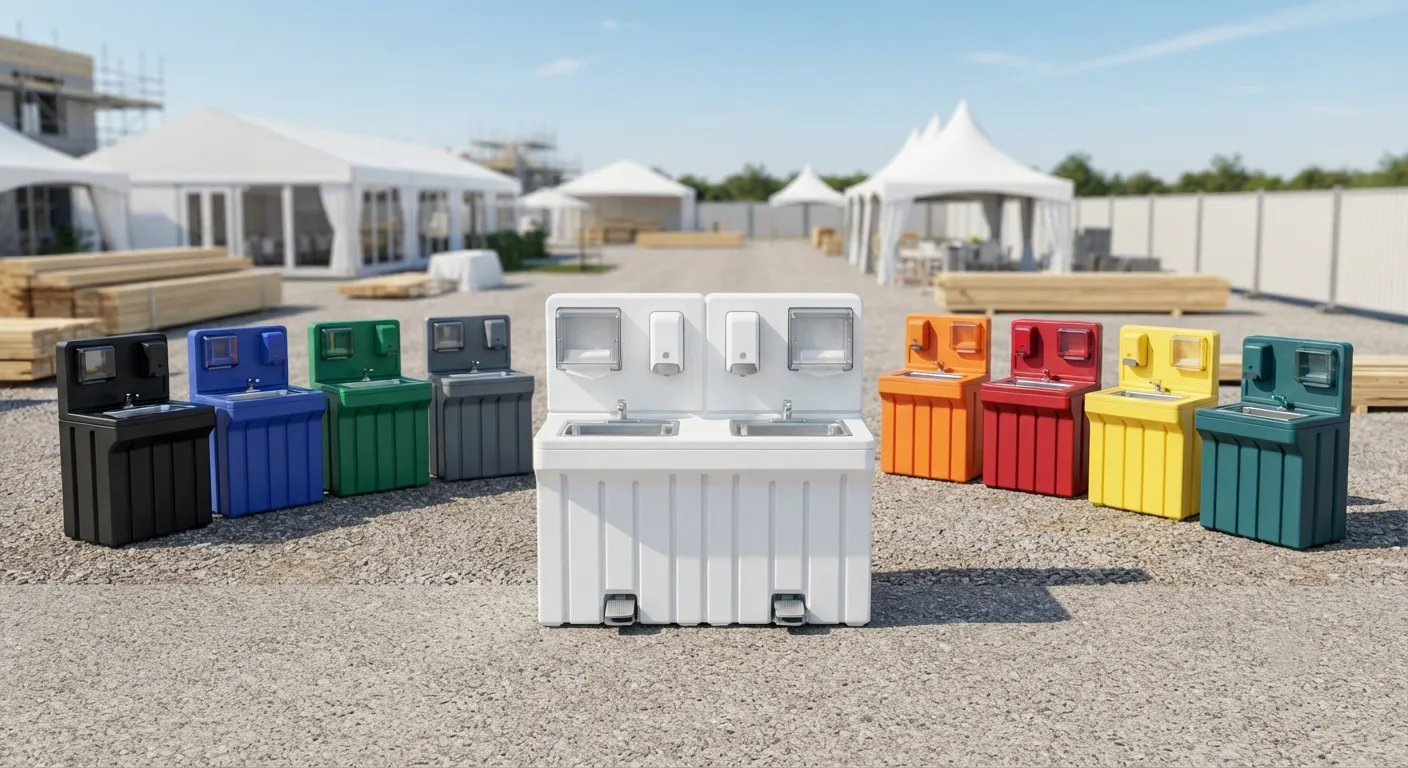
A portable sink runs on the same no-plumbing logic as the toilet: a freshwater tank feeds the faucet, usually by foot pump or a small motor, and a separate greywater tank underneath catches what drains out. Nothing connects to a building line. A handwashing station rental or portable sink rental needs soap and towels or a hand-drying device to actually satisfy 29 CFR 1910.141(d)(2), since hand sanitizer alone does not meet that standard. That distinction matters for job sites, because OSHA 1926.51(f)(1) requires washing facilities specifically where workers apply paints, coatings, herbicides or insecticides, not as a blanket rule for every site. For general field sanitation on farm crews, OSHA 1928.110 sets a different bar: one facility per 20 workers, reachable within a quarter mile walk. Framingham sites running paint or coating work should check the handwashing requirements page before assuming sanitizer stations cover it.
Why Do Porta Potties Need Chemicals?
The chemical mix does two jobs: it masks odor and it starts breaking down waste so the tank does not turn solid before the next service. Without it, a unit left for a week under the ANSI/PSAI Z4.3 baseline interval, one service visit per week for up to 10 users over a 40 hour week, would be far worse to open than one that gets treated. Searches for portable toilet chemicals near me usually turn up the same blue dye and deodorant packets suppliers use, similar in concept to septic tank cleaning chemicals used to keep a home system moving between pump-outs. A residential septic tank typically needs pumping every 3 to 5 years depending on tank size and household size, which is a different service entirely from what keeps a rental unit fresh weekly. Framingham Porta Pros handles both: standard rental units on a route schedule, and septic pumping service for homes and businesses on a longer cycle, including grease trap pumping for kitchens, since a grease interceptor needs servicing once fats, oils, grease and solids hit 25 percent of the liquid depth.
| unit | day | week | month |
|---|---|---|---|
| standard | $100-$350 | $130-$500 | $125-$325 |
| deluxe | $85-$1200 | $150-$290 | - |
| ada | $200-$400 | $240-$400 | - |
Weekend rates for a standard unit run in the $125 to $400 range, handy for a one-off event rather than a full week. For a longer build, the monthly porta potty rental page breaks down what changes at that length, and the porta potty rental cost page covers pricing drivers beyond just duration. Anyone renting for a single day should check porta potty rental per day before comparing against a weekly rate.
Does a porta potty need a water hookup?
No. A standard unit runs entirely on its sealed holding tank and chemical treatment, no water line required. That is what makes portable restroom rental possible on raw land or a fresh construction site in Framingham where utilities are not in yet. A flushable or deluxe unit carries its own small freshwater tank instead of tapping any outside source.
How often does a porta potty get serviced?
The baseline is one visit per week for up to 10 users over a 40 hour week, per ANSI/PSAI Z4.3. High-traffic events or larger crews need more frequent visits. Framingham Porta Pros schedules around actual headcount, not just the calendar default.
Can I put a porta potty on pavement or grass?
Both work, but placement affects service access and stability. See the porta potty placement guide for specifics on ground surface and clearance. ADA Standards 302.1 also requires stable, firm, slip-resistant surfacing for any accessible unit route.
Do porta potties smell in the summer heat?
Heat speeds up the chemical breakdown process, which can increase odor between services. Shade placement and service frequency both help. The do porta potties smell page covers what actually controls smell versus what people assume does.
What is different about a porta potty in winter?
Cold slows the chemical treatment down and can freeze standing water in flushable units. Framingham winters call for antifreeze-rated chemical mixes in place of standard treatment. Full details are on the porta potty in winter page.
Next step
Get a delivery date
Tell us the address, the dates and the headcount. We size the order and confirm the route.